

Barcelona, March 14, 2026
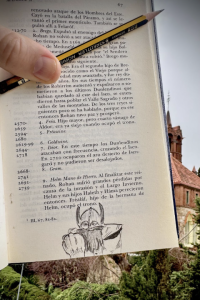
Yesterday, we watched The War Of The Rohirrim with the kids. I loved it. It’s based on just a few lines from the Appendices of The Lord of the Rings, set about 200 years before Bilbo finds the Ring.
The Tolkiendilis—the hardcore ones who hate comparisons—might not like this, but I couldn’t help noticing some echoes of the Arthurian saga in the film. For example, the wars of a king against his own lords in order to pacify and unify the realm.
Why is the Third Age of Tolkien’s “Legendarium” the most developed—and the one the general public enjoys the most? I think largely because, unlike the two previous ages, it is shaped by a fundamental theological virtue of the created world: hope.
In this BANI world —brittle, anxious, nonlinear, and incomprehensible— where everything seems to be unraveling and many paradigms are in crisis—the future of work, human intelligence and creativity as the summit of creation—hope, real hope, takes center stage.
But this virtue, like some others, is only real when it seems to be losing. When it is obvious to be hopeless.
Tolkien wrote in a time of deep hopelessness, not so different from ours, because two forces were at work. On the one hand, the beginning of a massive productive revolution that did not respect either nature or human nature (industrial Fordism and the assembly line then; the digital revolution and the early stages of generative AI today). On the other hand—perhaps as a consequence of the first—a growing arms race that creates the conditions to test its latest innovations, often inhuman ones, and ends up producing a new fracture in the world order.
Both eras structurally replay the same drama: original sin. Humanity tries to define itself instead of defining itself in relation to God. It rejects its identity as a creature and subjects creation not as a dominus—a lord who cares for and develops it—but as a tyrant.
Sometimes I close Instagram thinking it’s hard to keep hope in today’s world.
Then I remember that the enemy’s favorite sins are pride and despair. That God does not lose battles. And that we are on the winning side.
And the feeling passes.
Like Helm Hammerhand.
And you—what story, by Tolkien or anyone else, has helped you keep hope in difficult times?